The morning didn’t start with sirens.
It started quietly. The kind of cold, ordinary quiet Minneapolis knows well in January. Cars warming up. People heading out, thinking about coffee, schedules, small plans.
Nothing that felt dangerous.
Then everything shifted.
A street that usually blends into the background suddenly became the center of something heavy. Confusing. Loud. The kind of moment people describe later as happening “all at once,” even though it didn’t.
There was shouting. Movement. A vehicle boxed in tighter than it should’ve been.
And then the sound no one ever forgets once they’ve heard it.
Gunshots.

Neighbors didn’t know what they were seeing at first. A burgundy SUV. Officers surrounding it. Chaos that didn’t come with instructions.
Phones came out, hands shaking. Someone ducked behind a car. Someone else stood frozen, trying to make sense of angles and motion.
The SUV lurched.
Metal hit metal. A light pole bent. Parked cars shuddered.
A single detail would later stand out to everyone who watched the footage again: a hole in the windshield, right where no one wants to imagine one.
Minutes stretched. No one seemed sure what was allowed or safe. A woman inside the vehicle wasn’t moving.
And suddenly, this wasn’t just an “incident.”
It was something else entirely.
Word spread fast. Faster than clarity ever does.
Federal officers. A targeted operation. A claim of self-defense. A city already raw with history feeling that familiar ache in its chest.
Officials would later say the officers believed their lives were in danger. That the vehicle had been “weaponized.” That shots were fired to stop a perceived threat.
That explanation landed hard.
Because people watching the video had questions that didn’t go away.
Why so many officers?
Why so close?
Why did it end like this?
As the hours passed, frustration replaced shock.
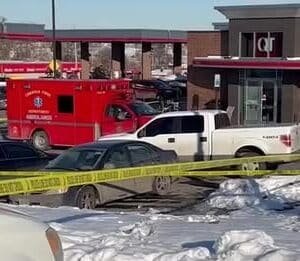
City leaders arrived. Faith leaders followed. Residents gathered at the edge of police tape, hands in pockets, breath visible in the cold.
Someone asked why medical help wasn’t happening faster.
Someone else said they saw a doctor turned away.
No one could confirm it yet—but the rumor alone felt explosive.
Anger doesn’t need much fuel when grief is fresh.
By late morning, the weight of it settled in.
A woman had been killed.
And she wasn’t some abstract figure in a report. She lived there. Shopped there. Raised a child there.
Around the point where people stopped asking if and started asking who, the name finally came out.
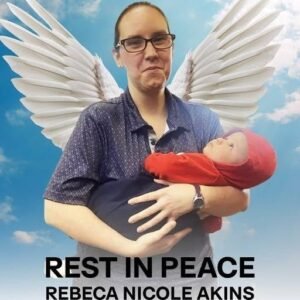
Her name was Renee Nicole Good.
She was 37.
A mother. A poet. A neighbor.
Someone whose presence was familiar enough that people could picture her walking down the block with her son, not as a headline, but as a person.
Friends described her as gentle. Thoughtful. The kind of person who made tea when you stopped by, even if you hadn’t planned to stay long.
She wrote. She played music badly by her own admission. She cared loudly and lived softly.
Her family confirmed it was her.
Her mother couldn’t believe it.
“That’s so stupid,” she said, the words blunt with shock. “She was probably terrified.”
She made it clear—her daughter wasn’t protesting. Wasn’t confronting anyone. Wasn’t known for violence or defiance.
“She was one of the kindest people I’ve ever known,” her mother said. “Compassionate. Loving. Forgiving.”
Those words traveled fast.
So did the pain behind them.
Renee left behind a six-year-old child.
That fact changed the tone of everything.
People stopped debating policy for a moment and just… paused.
A grandfather spoke up, worried about how to take care of the boy now. Willing to drive or fly anywhere to make sure he wasn’t alone.
Neighbors talked about seeing them together. About how sweet the kid was. About how impossible it felt to imagine the house without them.
“We’re gonna miss seeing them—forever,” one neighbor said, her voice breaking. “I don’t know how he’s going to do.”
At a vigil, hundreds gathered. Candles flickered in the cold. People chanted Renee’s name until it stopped sounding like a word and started sounding like a promise.
Speakers talked about her kindness. About how she showed up for others.
“She loved her neighbors,” one said. “That’s who she was.”
City officials didn’t hold back.
Members of the Minneapolis City Council demanded accountability. Not reviews. Not statements. Accountability.
The mayor called the situation heartbreaking and furious, and told federal agents they were not welcome in the city.
A state senator publicly questioned why lifesaving care may have been delayed.
The federal response didn’t change.
They stood by self-defense.
Two stories now exist side by side.
One told in official language about threats and training.
Another told in memories, poetry, cookies on a kitchen table, a child waiting for a mother who isn’t coming home.
And Minneapolis is left sitting between them.
Trying to understand how both can exist at once.
The street has quieted again. The tape is gone. Cars pass through like nothing happened.
But people still slow down when they reach that spot.
They still look.
Because something did happen.
Something that doesn’t feel finished.
Not in the investigations. Not in the questions. Not in the grief.
Renee Nicole Good’s words still exist online. Her voice still echoes in poems people are only now discovering.
Her son is still here.