Back then, it felt like the whole world was watching.
Every headline. Every opinion. Every late-night joke and morning show debate. It was impossible to escape, even if you wanted to.
And for a while, it seemed like this story would never quiet down.
Most people remember the shock first. The disbelief. The way strangers argued about choices they had nothing to do with. What almost no one remembers is what came after the cameras packed up.
Because life didn’t stop when the noise faded.
Years passed quietly. The kids grew. The chaos settled into routine. And the family everyone thought they knew slowly disappeared from public view.
Not because they vanished — but because someone made a decision.
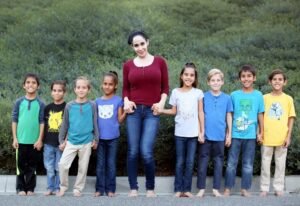
A decision to stop explaining.
To stop performing.
To raise kids instead.
Today, those eight babies people once counted on their fingers are teenagers. Fifteen years old. Taller. Louder. Opinionated. Fully their own people.
And they don’t live in a mansion.
They don’t live on a reality set.
They live in a modest three-bedroom townhouse in California, where space is tight and schedules matter and everyone has to pull their weight.
That detail alone surprises a lot of people.
The household runs on structure. Chores are expected. Cooperation isn’t optional. From an early age, the kids learned that being part of a big family means responsibility isn’t something you grow into — it’s something you practice daily.
It’s not chaotic the way people imagine.
It’s disciplined. Intentional. Calm in a way that only comes from routine.
Friends who visit notice it immediately.
The kids are polite. Grounded. A little serious in a way that feels unusual for their age. They help each other. They look out for others. They notice who needs help without being asked.
And yes — they’re vegan.
All of them.
Well… almost all.
Their mom jokes that one older sibling refuses to join the movement, a reminder that even in the most structured households, individuality still wins.
The focus on food isn’t about trends. It’s about health. Energy. Mental clarity. It’s part of a bigger commitment to well-being that guides the entire household.
Faith plays a role too.
The teens are described as deeply spiritual, service-oriented, and unusually empathetic. They volunteer. They think about people who have less. They ask hard questions.
That didn’t happen by accident.
It came from years of pulling back from the world instead of leaning into it.
Because here’s the part many people don’t know.
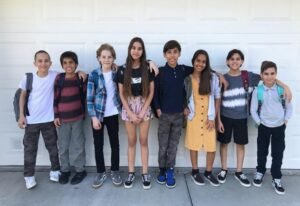
In the early years, survival came at a cost.
Financial pressure was relentless. Support wasn’t guaranteed. Judgment was everywhere. And yes, choices were made that their mother later admitted didn’t align with who she really was.
She’s spoken openly about that.
About doing what she felt she had to do — and hating how it felt afterward.
Those moments are why she walked away.
Why she changed her name.
Why she chose obscurity over relevance.
Her name is Nadya Suleman — though today she goes by Natalie.
And those eight kids?
They’re Noah, Josiah, Nariyah, Maliyah, Jonah, Jeremiah, Isaiah, and Makai.
The world once called her “Octomom.”
Her children just call her Mom.
Natalie doesn’t pretend the past didn’t happen. She acknowledges the controversy, the mistakes, the public fights — even the legal battles tied to the fertility doctor who made the octuplets possible.
But she doesn’t live there anymore.
She lives in the present. In packed schedules. In grocery lists. In rides to activities. In birthday planning and school projects and quiet gratitude.
Birthdays are a big deal.
Not flashy. Not excessive. But meaningful.
One recent celebration involved go-karts — eight teens racing each other, competitive, laughing, loud. A moment that felt incredibly normal considering how extraordinary their beginning was.
Natalie marked the milestone the only way she really shares anything now — a heartfelt social media post praising their resilience, their kindness, their bond.
People who follow along are often surprised by what they don’t see.
No tantrums.
No entitlement.
No bitterness.
Just a family that looks… solid.
The kids are doing well academically. Socially. Emotionally. They aren’t isolated. They aren’t sheltered in the way critics once predicted.
In fact, Natalie says her children often serve as role models for their peers — not because of their birth story, but because of how they treat people.
That might be the most unexpected part of all.
As the octuplets move closer to adulthood, questions naturally come up.
What will they choose?
How will they define themselves outside the shadow of their birth?
Will they ever step into the spotlight on their own terms?
Natalie doesn’t rush those answers.
She believes in letting them unfold naturally.
After everything, she’s learned that forcing a narrative never ends well.
The future isn’t mapped out. College. Careers. Independence. All of it is still forming.
But what’s clear is this: the story didn’t end the way people expected.
It didn’t collapse.
It didn’t spiral.
It got quieter. Stronger. More ordinary — in the best possible way.
And maybe that’s the most surprising chapter of all.
Because sometimes the biggest transformation doesn’t happen in front of cameras…
It happens when no one is watching — and the kids keep growing anyway.