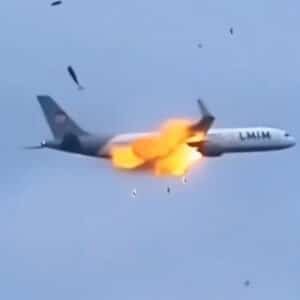
It was supposed to be a routine flight—another day in the sky, another plane crossing hundreds of miles. But just moments ago, something unimaginable happened.
A passenger plane, carrying more than 240 souls, plummeted from the sky. Smoke and fire shot into the air, painting a scene of chaos that left onlookers frozen in disbelief.
Eyewitnesses describe a terrifying moment: a roar, a flash, and then the unthinkable—metal and flames colliding with the earth. People nearby could do nothing but watch, helpless, as the world they knew shifted in an instant.
Emergency crews raced against time, navigating treacherous terrain and smoke-choked air. Sirens screamed, helicopters circled, and hospitals in the surrounding region scrambled to prepare for what they feared most.
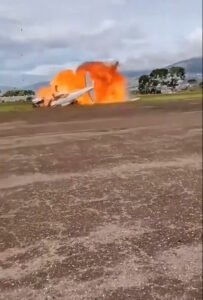
At this moment, the exact cause of the crash is unknown. Some experts point to possible mechanical failure. Others speculate about sudden weather changes, turbulence, or even human error. But in these first hours, certainty is elusive, and hope hangs by a thread.
Meanwhile, families of the passengers are trapped in a nightmare. Airport terminals are filled with anxious relatives, clinging to phones and praying for news. The fear is palpable, each moment stretching longer than the last.
Social media has erupted. Messages of solidarity, prayers, and disbelief pour in from around the globe. Strangers share each other’s grief, each tweet and post a testament to the collective hope that miracles might still occur.
Rescue teams are working tirelessly, their faces smeared with soot, their eyes scanning the wreckage for any signs of life. In these early hours, every second counts, every decision is critical, and the line between hope and despair feels impossibly thin.
The flight itself—a scheduled journey for business travelers, families, and vacationers—was normal until the final minutes. Passengers were going about their lives, unaware that their world was about to turn upside down. What happened onboard? Why did this plane go down? Investigators are already moving in, but answers will take time.
And yet, amid the destruction, whispers of survival emerge. Reports are fragmented, unconfirmed, but there are hints that rescue teams may have found individuals alive—clinging to life, waiting for help. Every detail is being verified, every moment a potential miracle.
The scale of the tragedy is immense. Aviation authorities are mobilizing, international leaders are speaking out, and the world watches in stunned silence. Flights are being delayed, newsrooms flooded, and communities everywhere feel the weight of this disaster.
But even in the darkest moments, stories of courage begin to surface. First responders risking their lives to reach the wreckage. Neighbors helping each other navigate chaos. Ordinary people performing extraordinary acts in the shadow of calamity.
Questions loom large: How could this happen? Will there be survivors? What will the investigation reveal? Every new piece of information is being pieced together, but right now, the priority is life, not blame.
Families cling to hope with trembling hands. Strangers pray for strangers. And above it all, the world waits, holding its collective breath, for a sign—any sign—that amidst this disaster, someone, somewhere, has survived.
This is still unfolding. Updates are coming in real time. Rescue crews are working through smoke, fire, and debris, fighting against every obstacle to save lives. And as the sun sets on this tragic day, the question remains: in a tragedy of this magnitude, is there hope yet?