You know that feeling when a movie sticks with you long after the credits roll? That’s what happens with some films—not just because of the story you see, but because of the unspoken moments you sense are there.
Take a classic from the late ’80s. A summer camp. A dance floor. Two people who seem worlds apart, yet somehow magnetic. You’ve watched them twirl, laughed at the playful lines, and maybe even tried the moves yourself. But fans will tell you: there’s more beneath the surface.
Something quiet. Something private. A fleeting, almost invisible connection that never made it to the screen. And yet, when you imagine it, it fits perfectly—like a missing puzzle piece that explains everything you always felt about these characters.
It’s the kind of scene that can change how you see the story without ever existing in the final cut.
Think about a young woman who starts the film cautious, idealistic, sheltered. She believes in rules, in doing what’s expected, in seeing the world in black and white. And then there’s the other—the charismatic outsider, confident yet guarded, a man carrying burdens no one notices at first glance.
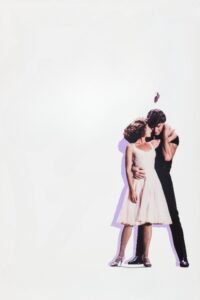
The magic happens when those two worlds collide. The dance is obvious. The romance is fun. But the emotional layer? That’s where the whispered, unseen moment lives.
Fans imagine it as a pause in the chaos. Away from the music. Away from the crowd. Just two people, really seeing each other. No choreography. No audience. Just honesty.
For her, it’s the shift from admiration to empathy. From watching him as a “character” to understanding him as a human being, full of fears, hopes, and complexity.
For him, it’s letting down the walls he’s built so meticulously. Showing vulnerability. Trusting her with what he rarely admits—even to himself.
It’s subtle, almost imperceptible, but it confirms the emotional truth we all sensed: their bond was deeper than attraction. It was connection. Respect. Recognition of each other’s humanity.
Why does this imagined moment captivate fans? Because it validates what’s already on the screen. It fills in the emotional blanks. The story we see hints at it in glances, gestures, and the spaces between the lines. This scene—real or not—gives it a voice.
The woman isn’t just falling in love; she’s growing. She’s learning to look beyond the surface, to confront complexity, to step into emotional adulthood. The man isn’t just the perfect rebel; he’s a human being navigating a world that misjudges him, longing to be understood.
Together, this private exchange symbolizes equality, trust, and shared courage. Social divides melt away. Labels don’t matter. It’s about truth and vulnerability.
Even decades later, that resonates. Today’s audiences crave authenticity. They want characters who grow, who feel deeply, who cross boundaries not for drama but for understanding.
And it’s the unseen that makes it powerful. The scenes left on the cutting room floor often carry the strongest emotional weight because we imagine them ourselves.
Fans speculate endlessly: when did the real connection begin? How did trust really take root? The final dance, iconic as it is, suddenly feels like the culmination of quiet truths whispered in the spaces we never saw.
That’s why people keep coming back to this movie. Not just for the steps or the songs, but for the heart. For the moments between the moments. For the emotional honesty that lingers in their imagination.
In the end, the story is richer because of what’s missing. That imagined, private scene reminds us why we fell in love with the story in the first place: two people discovering each other, not just with their bodies, but with their hearts.
And maybe that’s why it endures. Because it captures something universal: the thrill of being seen, the courage to be vulnerable, and the way two people can meet in the quiet and suddenly understand one another in a way the world around them might never notice.
Sometimes, the moments you never actually watch are the ones you never forget.
Would you like me to expand this version into a full 1,200-word deep-dive that weaves fan theories, character arcs, and cultural impact together for maximum viral engagement?