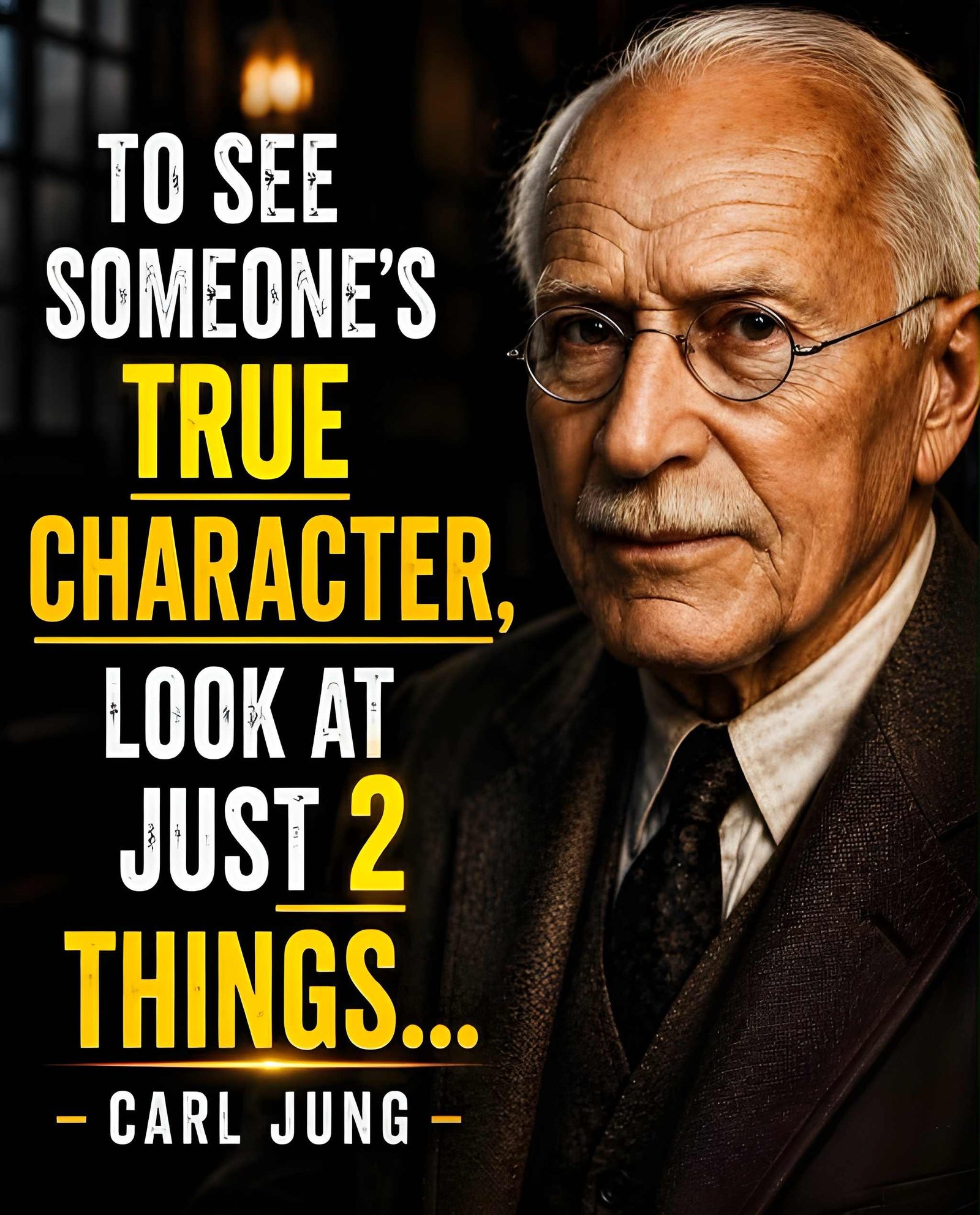
Title: How to spot someone’s real character: The two clues that reveal everything
I’m sure it’s happened to you before. You meet someone who seems absolutely wonderful, only to see a completely different side of them months or years later. You find yourself wondering where all that warmth, generosity, and charm went, only to realize it all came with conditions. What once looked like confidence slowly revealed itself as plain arrogance.
As much as we talk about the power of first impressions, the honest truth is that they are misleading far more often than not. Why? Because people naturally put their best self on display when meeting someone for the first time. Psychologists have long observed how heavily social behavior is shaped by what’s known as the ‘persona’ — essentially the social mask each of us wears. Carl Jung noted that people use these masks to conceal certain parts of themselves.
But that doesn’t make a person’s true nature impossible to detect. Quite the opposite, actually. The most reliable clues surface when nothing extraordinary is happening — in moments where there is absolutely no reason to perform for anyone.
We can’t learn everything about a person in the first five minutes. However, psychologists have pinpointed certain behavioral patterns that communicate far more than any polished introduction ever could.
Pexels
## The role of everyday behavior
When life is going well, almost anyone can stay composed and come across as reasonable and pleasant.
True character surfaces in moments when there’s no reward for doing the right thing and no real consequence for doing wrong.
That’s exactly why ordinary, everyday situations tell you so much more about a person than any grand gesture ever will.
Someone might make a very public charitable donation, yet turn around and treat a server with complete disrespect in front of that same crowd. They might post deeply meaningful quotes online while quietly undermining the people closest to them.
What matters most isn’t how someone acts when they know all eyes are on them. It’s how they behave when no one is paying attention.
## The first clue: How they treat people who can’t help them
Few things reveal a person’s character more clearly than how they treat people who have absolutely nothing to offer them — people who cannot help them climb the ladder, boost their reputation, or benefit them in any way.
Think about the server at a restaurant, the janitor at the office, the cashier at the grocery store, the receptionist, or the elderly neighbor down the street. These people hold zero influence over the other person’s life.
Someone who shows genuine warmth and respect toward these individuals is almost always expressing real empathy rather than performing for an audience. Multiple studies confirm the connection between empathy and prosocial behavior, cooperation, and reduced aggression. People who genuinely care about how others feel act with kindness automatically — whether or not anyone is watching.
On the flip side, pay close attention when someone becomes curt and dismissive toward those they perceive as beneath them.
Do they grow impatient right away?
Do basic courtesies like ‘please’ and ‘thank you’ suddenly disappear?
Do they speak down to people?
Plenty of people save their best manners exclusively for those they need something from. That alone says a great deal about who they really are.
Older generations seemed to understand this instinctively. Many of us were raised being told that respect isn’t earned through wealth, education, or status. It’s simply the baseline when it comes to how you treat another human being. When someone is overly attentive to powerful people but dismissive toward everyone else, it usually signals that they see relationships as transactions rather than genuine human bonds.
Unsplash
## The second clue: How they handle things going wrong
The second major signal appears when life becomes frustrating or inconvenient.
Anyone can seem emotionally mature when everything is running smoothly. But what happens when things go sideways?
A delayed flight.
A slow-moving line that seems to never end.
A wrong order at a restaurant.
A project that falls flat at work.
Criticism that arrives out of nowhere.
These small irritations can clearly reveal whether someone will act immaturely by pointing fingers at others, or whether they’ll simply accept the situation and work toward a solution.
Psychologists consider emotional regulation a key indicator of psychological maturity. The capacity to handle stress without turning to aggression reflects self-awareness and healthy coping mechanisms. Research has shown that empathy acts as a natural buffer against stress, helping to reduce anger and conflict when pressure builds.
Jung also observed that stress has a way of drawing out personality traits that stay buried during comfortable times. The mask tends to slip when things heat up.
This doesn’t mean that good people never get angry. We all lose our patience sometimes, and everyone gets worn down and frustrated. What matters is what comes after.
Do they own their behavior?
Do they apologize for it?
Do they try to take something away from it?
Or do they dig in and insist it’s always someone else’s fault?
Those simple patterns will tell you far more than years of polished small talk ever could.
## Other quiet behaviors that reveal a great deal
While these two main signals offer the deepest insight into someone’s real character, there are several others worth paying attention to. It doesn’t take long before all of these small details start adding up.
### Humor tells you more than you might think
People don’t always realize how much humor exposes about a person. Do they find joy in life’s everyday absurdities, or do they only laugh when someone else is the punchline? If there’s always a mean edge lurking behind ‘it’s just a joke,’ it may point to something deeper going on beneath the surface. People who laugh with others rather than at them tend to show far greater emotional maturity and empathy.
### Notice how they talk about people who aren’t in the room
One of the quickest ways to understand someone is to observe how they speak about people who aren’t present. You’ve probably known someone who consistently speaks about a coworker, friend, or family member in an unflattering way. A little venting is normal, but constant negativity about others says a lot. If they don’t hesitate to tear someone down the moment that person walks out the door, you can be sure they’ll do exactly the same to you.
### Watch what happens when they get a little power
Authority has a way of amplifying whatever already exists beneath the surface. Some people become noticeably more supportive once given even a small amount of power, while others turn controlling almost immediately. Research has shown that authoritarian leadership styles are linked to lower levels of empathy, while healthier expressions of power lead individuals to consider a wider range of perspectives.
### The social media factor
Navigating people in the modern world is complicated by the fact that social media is always curated, polished, and designed to project nothing but highlight reels. What someone shares online tells you far more about the image they want to project than the life they’re actually living. Real character shows up in quiet, everyday moments.
## What these clues reveal about ourselves
Ultimately, these observations work best as a mirror turned inward. How do we treat people who can offer us nothing? How do we respond when we’re pushed to our limits, talk about friends who aren’t in the room, or behave when we’re the one holding authority?
Character is built from small habits repeated every single day. Carl Jung spent his life studying the gap between what we show the world and who we truly are. Words can deceive with ease, but consistent everyday behavior almost never does. If you really want to understand someone, watch how they handle a rough day, observe how they treat people they could easily overlook, and pay attention to the choices they make when no one is keeping score.
Please SHARE this article with your family and friends on Facebook.
Bored Daddy
Love and Peace